

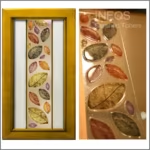



Architects and tile makers choose fired ceramic decoration for one reason: it does not age. A printed and fired mural on a pool wall, a metro station or a facade looks the same after twenty years of chlorine, sunlight and cleaning. Digital printing adds what screen printing never could: any image, any size, no minimum.
Two ways to print large
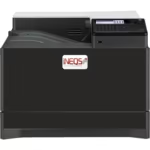
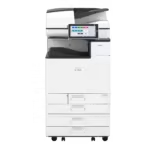
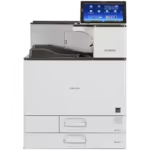
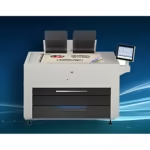
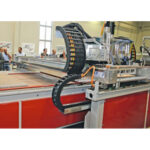
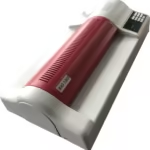
- One decal. The INEQS wide-format printer prints ceramic toner on A0 paper (printable 900 x 1,000 mm) and rolls, so a full panel or a run of large tiles is one continuous image with no joins.
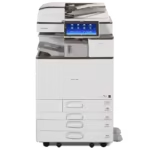
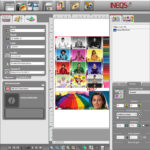
- Tiled sheets. A3 or SRA3 decals cut to tile size and applied tile by tile. INEQS RIP software handles the split, bleed and numbering, and a single ICC profile keeps colour identical across every sheet.
Substrates and firing
Glazed wall and floor tiles take unfluxed sets fired at 880 to 1,150 °C, which puts the image inside the glaze and makes it abrasion resistant for floors and pools. Glass panels for facades and interiors take the fluxed glass toner set.
Who we work with
Tile factories adding a digital line next to screen printing, mural studios producing bespoke bathroom and kitchen pieces, and architects specifying ceramic cladding. Several of our customers print decals for other people’s tiles, as a service; that business model works with one SRA3 printer and a kiln.
From image to installed mural
- Artwork. Supply the image at final size with an embedded colour profile, or the highest resolution you have for photographic murals; tell us the tile size and joint width.
- Split and number. For tiled murals, the image is split to tile size with bleed and each decal is numbered, so the installer knows where every tile goes.
- Print and coat. Decals are printed with an unfluxed set for glazed tile and covercoated with flux.
- Apply and fire. Each decal is applied to its tile and fired in-glaze, so the image becomes part of the tile surface.
- Install. The fired tiles are fixed and grouted like any other tile.
Pools, wet areas and outdoor walls
Fired in-glaze, the mural is as resistant as the glaze itself to chlorine, cleaning chemicals, frost and sunlight. Use tiles rated for the location, because the decoration never outlasts the tile it is fired into. For exterior glass, the fluxed glass set fires into the glass surface instead.
Murals as a service or in house
For a single project, the INEQS print service prints the decals and ships them ready to apply and fire, quoted per square metre on your tiles. Tile makers and studios producing murals regularly usually move to their own wide format or SRA3 printer.
Kiln-fired murals vs dye sublimation tiles
Many printed tiles in the market are dye sublimation: the image is heat pressed into a polymer coating on the tile surface. They are quick to make, but the coating can scratch and the dye can fade in sunlight, so they suit decorative indoor pieces. A kiln-fired ceramic tile mural is printed with ceramic pigments that fuse into the glaze, so the image becomes part of the tile. It suits shower walls, kitchen backsplashes, swimming pools, outdoor walls and floors, as long as the tile itself is rated for the location, and it does not fade.
Custom tile murals from your own photo or artwork
Any photograph, painting or design can become a custom ceramic tile mural, provided the file has a good enough resolution for the final size. Large murals are viewed from a distance, so talk to us before enlarging a small image: the INEQS print service checks every file and advises on the largest size it will hold sharply.