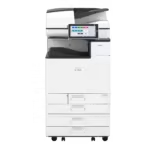
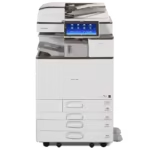
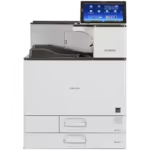
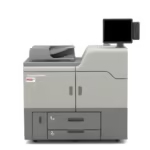
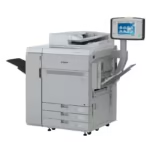
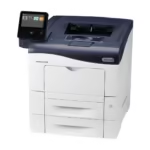
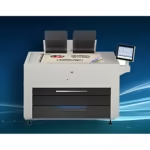

Every ceramic printing project comes down to four key questions: What material are you firing on? At what temperature? How large is the piece? And how many prints do you need?
The answers determine the right printer format, printer model and toner set for the application.
These pages cover the most common applications we equip, from a small studio producing a few memorial plaques per week to industrial production decorating thousands of square metres per month.
If your application is not listed, it may still be perfectly feasible. Send us a photo of the material and a sample file, and we can evaluate the application and, if required, produce a test print and fired sample for you.
Find your application
- Tableware and porcelain: dishwasher safe decoration on porcelain, stoneware and bone china, in-glaze or onglaze
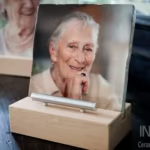
- Portrait and memorial ceramics: photo ceramics for headstones, urns and plaques
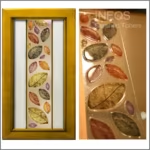
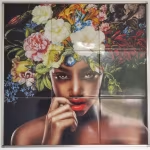
- Tile murals and architectural ceramics: murals, pool tiles and facade panels up to A0 in one piece
- Glass decoration: fired decoration on float and borosilicate glass, bottles and glassware
- Enamel signs and metal: signage, plaques and nameplates on enamelled steel
- Studios, artists and schools: A4 printer and a kiln for your own work
- Industrial ceramic printing: decal lines and direct inkjet for factories
The four questions, answered
What material are you firing on?
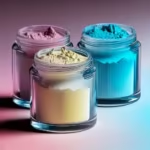
For glazed tiles, stoneware, porcelain and in glaze firing, our toners without flux are the right choice. Table ware products and vitreous enamel are typically decorated with toners with flux. Glass requires a dedicated glass toner matched to the material.
At what temperature?
The firing temperature depends on the toner family: approximately 860 to 1,150 °C for toners without flux, 805 to 900 °C for toners with flux and around 540 to 630 °C for glass toner.
How large is the piece?
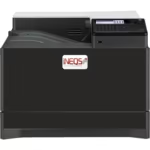
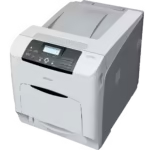
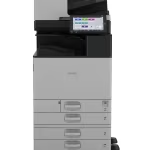
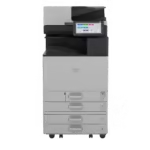
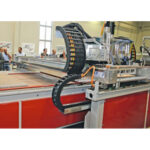
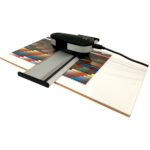
A4 is suitable for cups, plaques and small tiles. A3 and SRA3 cover larger plates, plaques and mural sections, while A0 systems are designed for large panels and murals.
How many prints do you need?
Small quantities are often best handled through the INEQS decal printing service. Regular production suits an A4 or SRA3 ceramic printer in house, while high production volumes require a dedicated production system or production line.