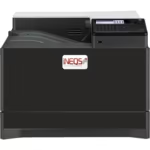
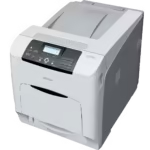
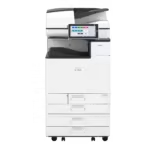
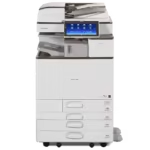
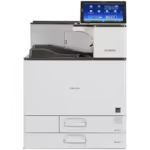
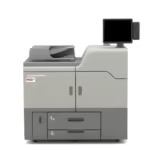
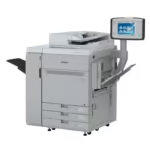
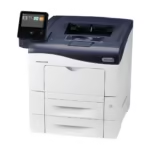
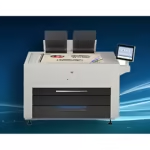


The printer is one machine in a line. INEQS supplies the rest: coating, lamination and firing, sized to the volume you actually run.
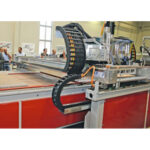
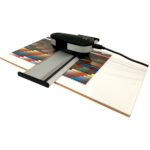
Screen-printing machines
Manual and automatic machines for applying covercoat and flux coatings to ceramic decals. For medium and high volumes this is still the cheapest and most controllable coating method. Coating thickness is adjustable, so a decal can be tuned for easier transfer onto curved or uneven ware. Customers who combine digital decals with screen-printed gold and platinum use the same machines for both.
Why screen printing
- Lowest coating cost per decal
- Excellent and repeatable coating quality
- Adjustable coating thickness
- Easier decal handling during transfer
- Ideal for curved and uneven surfaces
- Suited to medium and large production volumes
What it costs you
- Longer setup than spray coating
- Screens have to be cleaned
- Drying time before transfer
- Solvent fumes during processing
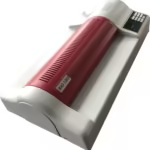
Laminators
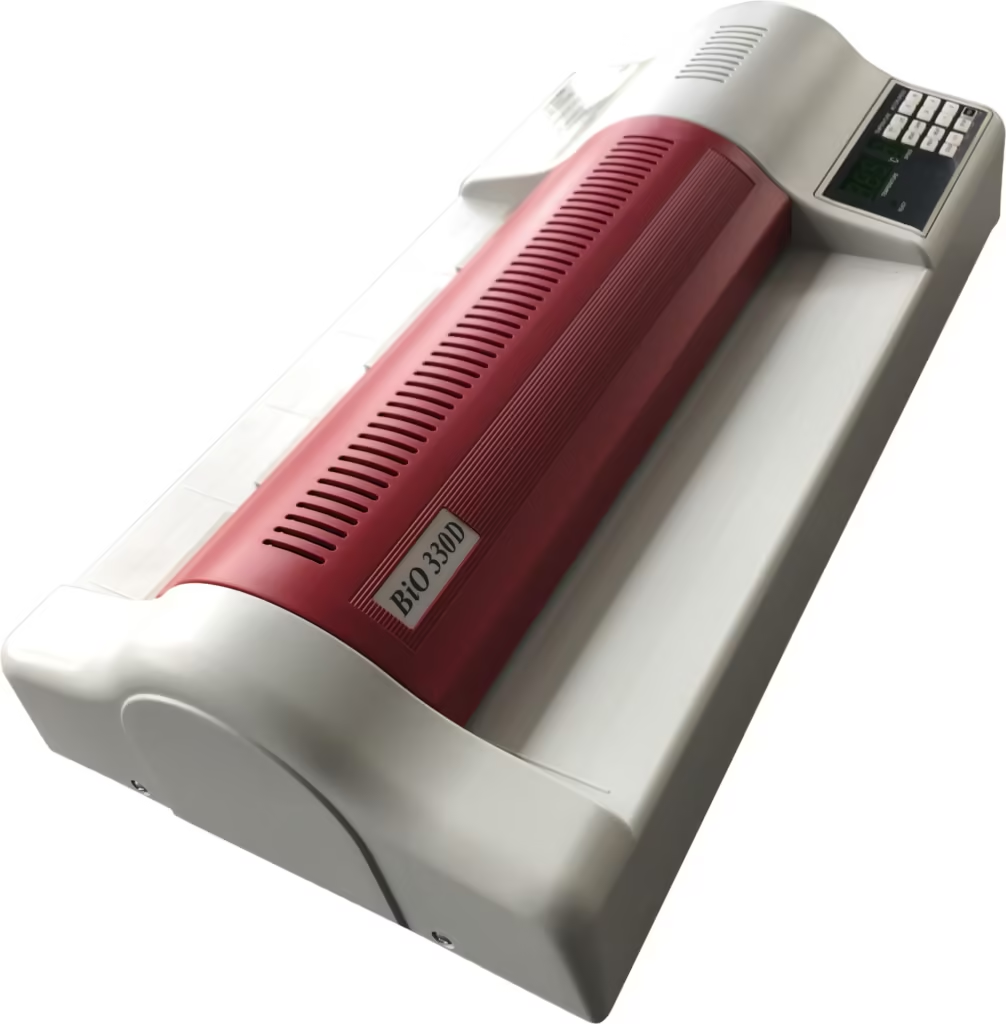
Hot laminators sized for A4, A3 and A3+ sheets, set up for INEQS lamination paper. Lamination lays a durable carrier film over the printed image, protecting it and supporting safe handling through transfer and firing. It is the fastest way to apply covercoat in production and the least dependent on the operator.
- Fast processing
- Consistent coating quality with little operator influence
- Clean and repeatable workflow
- Decals can be processed immediately after laminating
- Suited to high production volumes
Kilns
Electric kilns with programmable controllers, sized from a single test piece to production loads, reaching every INEQS firing range. Firing is the step that decides the job: the organic components burn away and the ceramic pigment bonds permanently to the substrate, so the wrong kiln or the wrong program shows up as colour error and weak adhesion. INEQS supplies the firing curve and helps commission the first firing.
- Precise temperature control
- Repeatable firing results
- Reliable colour development
- Programmable firing cycles
- Ceramic, glass and enamel decoration
Which coating method do you need?
- A few decals at a time: coating spray. No screen to prepare and clean for every job.
- Regular production: screen printing. Lowest cost per decal and full control of coating thickness.
- High volume with minimal operator input: lamination.
Not sure which fits your run size? Tell us what you make and how much of it, and we will say which machine pays for itself.