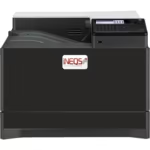
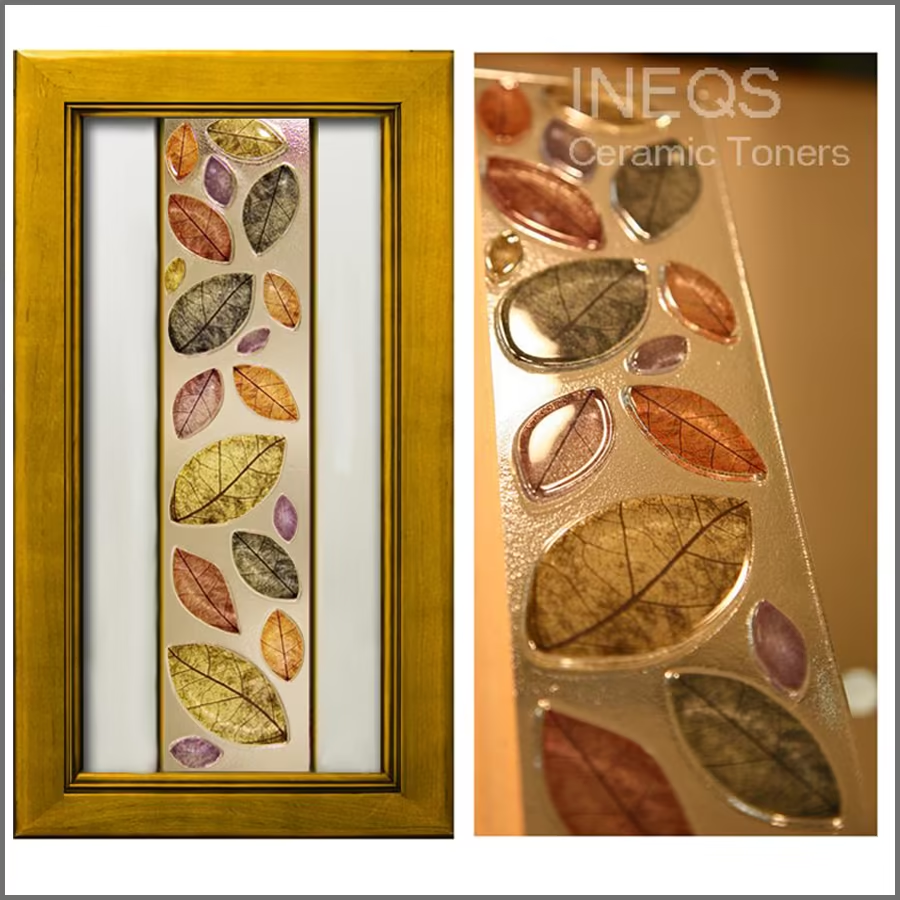
Ceramic printing on glass is different from UV or screen printing on glass: the image is not sitting on the surface, it is fused into it. INEQS glass toner makes that possible on a laser printer, with a decal that can reach shapes no flatbed can.
Glass has no glaze to melt into and expands differently from ceramic, so it needs its own toner. INEQS glass toners carry a flux matched to the expansion of glass and fire at 540 to 630 °C, low enough not to deform the piece and high enough to fuse permanently. The result is a decoration that cannot be scratched off and survives the dishwasher.
Sets for glass
- Glass toner B/W: for text, logos and line art on clear and dark glass
- Fluxed red glass set: full colour including a true red, for photographic and branded work
Applications
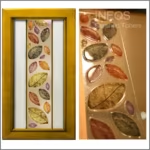
Glass tableware and promotional glasses, backlit interior panels, facade glass, laboratory and technical glass marking, and glass signage. Because printing is decoupled from the object, decals can be applied to shapes a printer could never reach: bottles, tubes, curved panels.
Coating
Fluxed sets on glass can be coated with lacquer only, which leaves no visible edge after firing. A fluxed covercoat gives a shinier surface but can show an edge; cover the whole area or align the decal with an existing edge to avoid it.
A fired glass decal, step by step
- Print the design on INEQS decal paper with a glass toner set
- Coat with lacquer, or with a fluxed covercoat for a shinier finish
- Clean the glass so it is free of grease and dust
- Soak the decal, slide it into position and squeegee out all water and air from the centre outwards
- Dry, then fire within the set’s range of 540 to 630 °C, ventilating while the coating burns out, and let the kiln cool closed
Which glass works
Float glass and borosilicate glass are the standard substrates for INEQS glass toner. Soft soda glass and unusual compositions should be tested first, because glass that softens at a lower temperature can deform before the colour fuses. Tempered glass loses its temper if it is heated again, so decorate glass before tempering or use pieces that do not need it.
Decal or inkjet on glass?
Large flat architectural panels are usually printed with ceramic inkjet before tempering. Decals win on everything else: bottles, drinking glasses, tubes, awards, curved and small pieces, and runs from one piece upwards. Both routes fuse inorganic pigment into the glass, so the print is as permanent as the glass itself. More on the technology in how digital ceramic printing works.
Ceramic printing on glass vs UV printing
UV printed glass carries an organic ink cured on the glass surface. It is quick and colourful, but it can scratch and is less suited to exterior use and repeated washing. In digital ceramic printing on glass, ceramic ink or ceramic toner carries glass frit and inorganic pigment that are fused into the glass in the kiln or the tempering furnace. The print becomes part of the glass surface and takes on the durability of the glass itself: scratch resistant, chemical resistant and UV stable outdoors.
Where fired glass decoration is used
Decorative glass and glass panels for interiors, architectural glass for facades and partitions, glass signage and awards, and laboratory and technical glassware with permanent scales and markings. Flat glass panels in large runs are usually printed directly with ceramic inkjet before tempering; bottles, drinking glasses and shaped pieces are decorated with glass decals, from a single piece upwards.