



INEQS Lamination Paper is used in ceramic decal production to create a protective carrier film over the printed image before transfer.
It provides excellent handling characteristics and reliable decal performance during soaking, transfer and firing. The lamination process is particularly suitable for large decals, detailed graphics and demanding decoration applications.
Available Products (Fluxed or unfluxed)
- Lamination Paper A4, format A4 (210 × 297 mm)
- Lamination Paper A3, format A3 (297 × 420 mm)
- Lamination Paper A3+, format A3+ (305 × 457 mm)
- Lamination Paper SRA3, format SRA3 (320 × 457 mm)
Suitable for use with INEQS Liquid Cover Coat and ceramic decal papers.
Applications
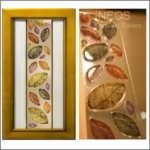
- Porcelain Decoration
- Tableware
- Ceramic Tiles
- Glass Decoration
- Memorial Ceramics
- Enamel Decoration
INEQS Lamination Paper is designed for professional ceramic decal production and ensures consistent transfer quality and reliable processing.
How lamination works
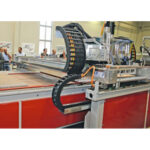
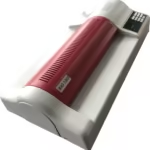
A hot laminator presses INEQS lamination paper onto the printed decal sheet and lays a covercoat film over the image. That film protects the print, holds it together while the decal is soaked and slid onto the ware, and burns out during firing. Because the machine sets the pressure and temperature, the coating comes out the same on every sheet, whoever is operating it.
When lamination is the right choice
- Regular production, where speed and repeatability matter more than the cost of the machine
- Large decals and detailed graphics that need a strong, even carrier film
- Workflows where decals should be ready to apply immediately after coating, with no drying time
For a few decals at a time, coating spray needs no equipment. For medium and high volumes at the lowest cost per decal, screen printing is still the benchmark.
Laminators and formats
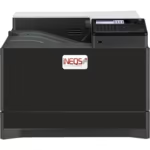
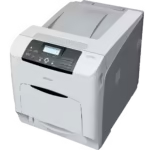
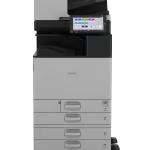
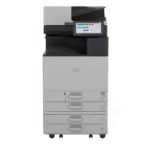
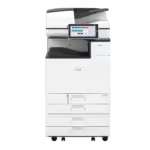
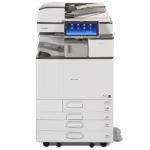
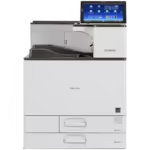
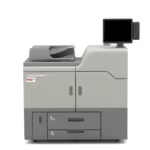
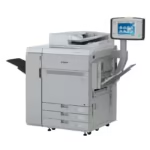
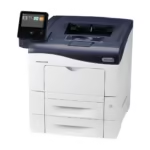
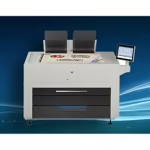
INEQS lamination paper comes in A4, A3, A3+ and SRA3, matched to the decal paper formats. INEQS supplies hot laminators sized for A4, A3, SRA3 and wide format sheets and set up for its lamination paper; see laminators, screen printing machines and kilns. As with every coating, unfluxed toner needs a fluxed layer before firing, so confirm the combination for your toner set.