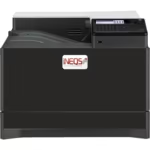
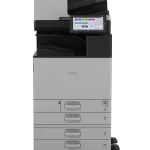
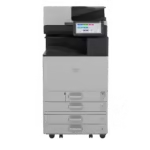
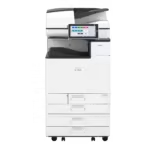
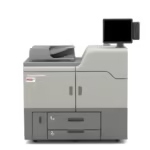
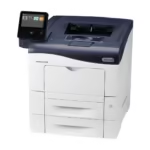


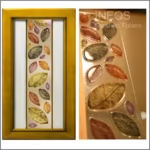


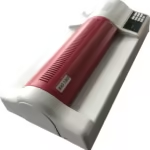
The IM C401 is designed for ceramic studios, artists and schools that want to produce photographic images, drawings and text on their own ware without a screen-printing setup.
It is a compact A4 ceramic printer that fits easily into a small workshop or studio. Depending on the application, it can run toner without flux for in-glaze decoration on stoneware and porcelain, or toner with flux for onglaze decoration of finished glazed pieces.
What studios do with it
- Combine hand-thrown or slip-cast ware with printed imagery
- Editions of tiles, plates and mugs with a signature design
- Commissioned pieces with customer photographs
- Teaching ceramic surface design with a repeatable digital process
Getting started
A starter set, decal paper, covercoat and a firing curve come with every printer. Most studios are producing saleable work in the first week; INEQS supports the first firings remotely. If you would rather start smaller, the print service makes decals from your files so you only need the kiln.
A typical studio setup
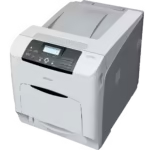
- An A4 ceramic printer: the IM C401, the CeramPrint CP-500 or a used Ricoh SP C440
- One toner family to start: unfluxed for in-glaze work on stoneware and porcelain, or fluxed for onglaze on finished pieces
- Decal paper and a covercoat; coating spray suits studio volumes
- A kiln with a programmable controller that reaches your set’s range, ventilated up to about 420 °C
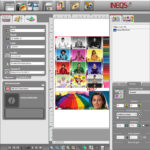
- Any image editor that exports PDF, TIFF, JPG or PNG at 300 dpi with an embedded colour profile
Designing for ceramic decals
A few rules save a lot of test firings. White in a design prints as nothing, so the colour of the ware shows through; plan light areas around your glaze. Very pale tints below about 5% can fire out completely. Reds need a red toner set, because magenta and yellow lose their red above about 1,000 °C. And the fired palette is narrower than a screen, so judge colour on a fired test tile, not on the monitor. Full details are in preparing files for ceramic printing.
Teaching with a ceramic printer
For schools, colleges and makerspaces, digital decals turn surface design into a repeatable process students can plan, print and fire within a class timetable. Photographs, drawings and typography go onto hand built or thrown work without screens, films or chemicals, and a single A4 printer serves a whole studio. INEQS supports the first firings remotely, so staff do not need prior experience.